Categories
Reviews

7 Awesome Books to Increase Your Productivity

Are you feeling overwhelmed by the amount of work you have to do? Do you struggle to find enough time in the day to get everything done? If so, you are not alone. Many people struggle with time management and find it difficult to be productive. However, there are time management techniques that you can use to increase your productivity and get more done in less time.

The 10x Rule

The first step in managing your time effectively is to set goals. Setting clear and specific goals helps you stay focused and motivated. Write down your goals and break them down into smaller, more manageable tasks. The 10X Rule by Grant Cardone is a great book for setting ambitious goals and taking massive action towards achieving them.

Amazon

Eat That Frog!

Once you have set your goals, prioritize your tasks. Identify the tasks that are most important and urgent and work on them first. This will help you avoid getting overwhelmed and ensure that you are making progress on the most critical tasks. Eat That Frog! by Brian Tracy is a classic book on time management that provides practical tips on how to prioritize tasks and avoid procrastination.

Amazon

The One Thing

Creating a schedule helps you manage your time effectively. Block out time for your tasks and make sure you stick to your schedule. Use tools like calendars and to-do lists to keep yourself organized and on track. The One Thing by Gary Keller and Jay Papasan is a great book on productivity that emphasizes the importance of focusing on one thing at a time and creating a schedule that aligns with your goals.

Amazon

Digital Minimalism

Distractions can be a significant hindrance to productivity. Identify the things that distract you and eliminate them. For example, if social media is a distraction, consider using apps that limit your social media use during work hours. Digital Minimalism by Cal Newport is an excellent book that provides insights on how to reduce digital distractions and optimize your use of technology.

Amazon

The Power of Full Engagement

Taking breaks is essential for maintaining productivity. It’s essential to take short breaks throughout the day to recharge your energy and refocus your mind. Try taking a five-minute break every hour or two, or taking a longer break every two to three hours. The Power of Full Engagement by Jim Loehr and Tony Schwartz is a great book on how to manage your energy and achieve peak performance through strategic breaks and recovery.

Amazon

The 7 Habits of Highly Effective People

Delegating tasks is an effective time management technique. Identify the tasks that can be delegated and assign them to others. This will free up your time to focus on more critical tasks and increase your productivity. For more resources on delegation and time management, you can check out the Harvard Business Review’s guide on Delegation, or read Stephen Covey’s book, The 7 Habits of Highly Effective People.

Amazon

The Art of Saying No

Learning to say no is essential for managing your time effectively. If someone asks you to take on a task that is not important or urgent, politely decline. This will help you avoid taking on too much and ensure that you can focus on your priorities. The Art of Saying No by Damon Zahariades is a great book that provides practical tips on how to set boundaries, say no to requests that don’t align with your goals, and prioritize your time effectively.

Amazon

In conclusion, time management is essential for increasing your productivity. By setting goals, prioritizing your tasks, creating a schedule, eliminating distractions, taking breaks, delegating tasks, and learning to say no, you can manage your time effectively and get more done in less time. Remember, managing your time is a skill, and like any skill, it takes practice to master. Start implementing these techniques today and watch your productivity soar.
Categories
Reviews

The Personal MBA: A World-Class Business Education in a Single Volume

The Personal MBA: A World-Class Business Education in a Single Volume

Amazon Link

Categories
Reviews

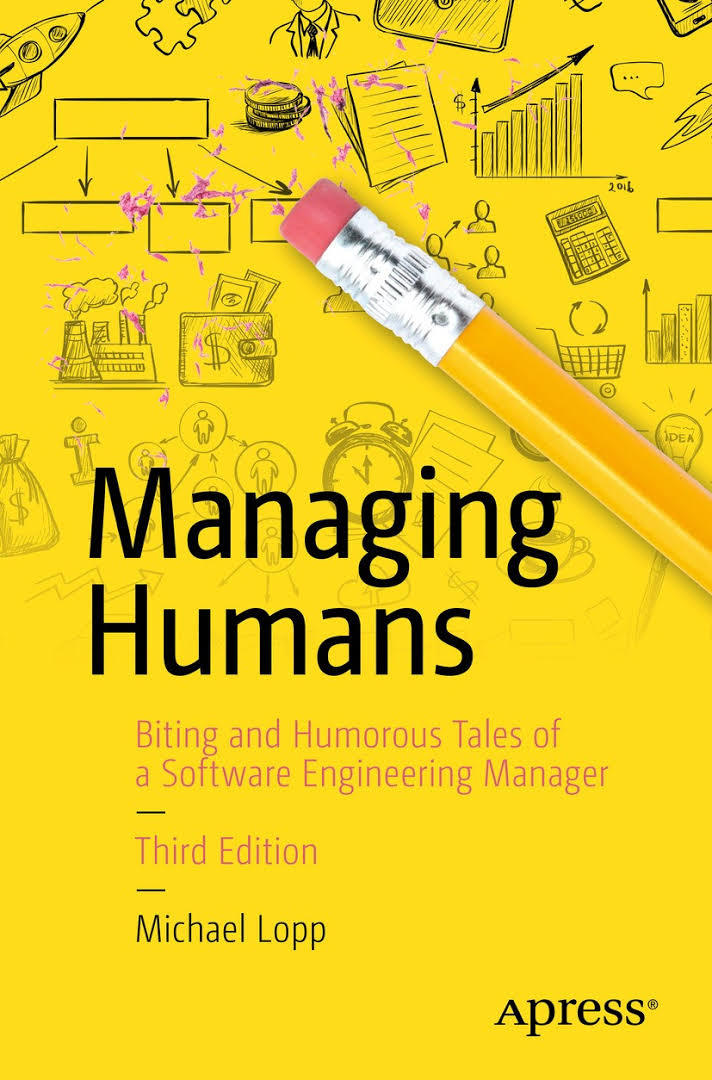
Managing Humans: Biting and Humorous Tales of a Software Engineering Manager

Managing Humans: Biting and Humorous Tales of a Software Engineering Manager

Read hilarious stories with serious lessons that Michael Lopp extracts from his varied and sometimes bizarre experiences as a manager at Apple, Pinterest, Palantir, Netscape, Symantec, Slack, and Borland. Many of the stories first appeared in primitive form in Lopp’s perennially popular blog, Rands in Repose. The Third Edition of Managing Humans contains a whole new season of episodes from the ongoing saga of Lopp’s adventures in Silicon Valley, together with classic episodes remastered for high fidelity and freshness.

Who This Book Is For

Managers and would-be managers staring at the role of a manager wondering why they would ever leave the safe world of bits and bytes for the messy world of managing humans. The book covers handling conflict, managing wildly differing personality types, infusing innovation into insane product schedules, and figuring out how to build a lasting and useful engineering culture.

Whether you’re an aspiring manager, a current manager, or just wondering what the heck a manager does all day, there is a story in this book that will speak to you―and help you survive and prosper amid the general craziness of dysfunctional bright people caught up in the chase of riches and power. Scattered in repose among these manic misfits are managers, an even stranger breed of people who, through a mystical organizational ritual, have been given power over the futures and the bank accounts of many others.

Lopp’s straight-from-the-hip style is unlike that of any other writer on management and leadership. He pulls no punches and tells stories he probably shouldn’t. But they are magically instructive and yield Lopp’s trenchant insights on leadership that cut to the heart of the matter―whether it’s dealing with your boss, handling a slacker, hiring top guns, or seeing a knotty project through to completion.

Amazon Link

Categories
Reviews

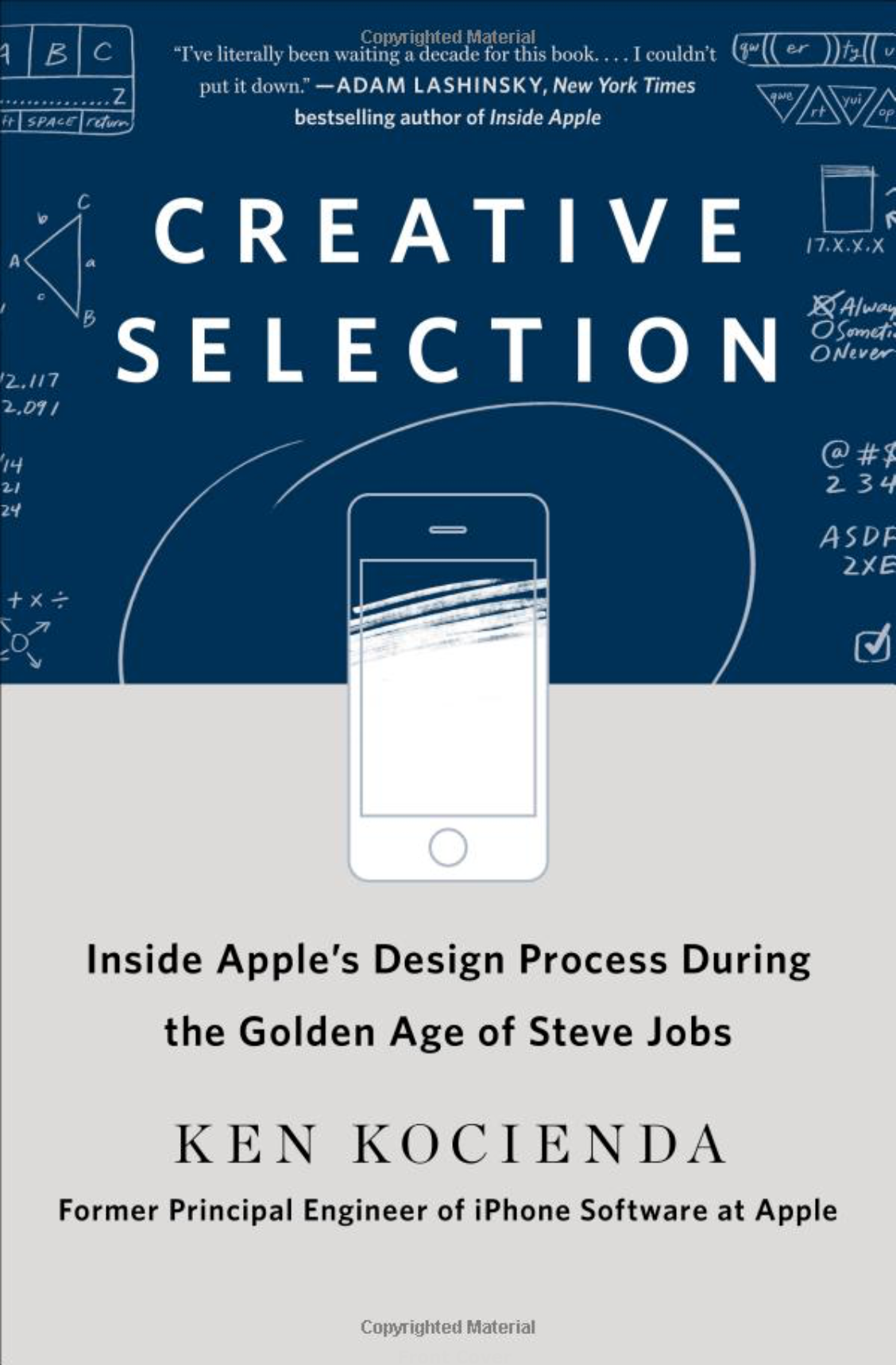
Creative Selection – Inside Apple’s Design Process During the Golden Age of Steve Jobs

Creative Selection – Inside Apple’s Design Process During the Golden Age of Steve Jobs

Hundreds of millions of people use Apple products every day; several thousand work on Apple’s campus in Cupertino, California; but only a handful sit at the drawing board. Creative Selection recounts the life of one of the few who worked behind the scenes, a highly-respected software engineer who worked in the final years of the Steve Jobs era―the Golden Age of Apple.

Ken Kocienda offers an inside look at Apple’s creative process. For fifteen years, he was on the ground floor of the company as a specialist, directly responsible for experimenting with novel user interface concepts and writing powerful, easy-to-use software for products including the iPhone, the iPad, and the Safari web browser. His stories explain the symbiotic relationship between software and product development for those who have never dreamed of programming a computer, and reveal what it was like to work on the cutting edge of technology at one of the world’s most admired companies.

Kocienda shares moments of struggle and success, crisis and collaboration, illuminating each with lessons learned over his Apple career. He introduces the essential elements of innovation―inspiration, collaboration, craft, diligence, decisiveness, taste, and empathy―and uses these as a lens through which to understand productive work culture.

An insider’s tale of creativity and innovation at Apple, Creative Selection shows readers how a small group of people developed an evolutionary design model, and how they used this methodology to make groundbreaking and intuitive software which countless millions use every day.

Amazon Link

Categories
Reviews

Managing Humans: Biting and Humorous Tales of a Software Engineering Manager

Managing Humans: Biting and Humorous Tales of a Software Engineering Manager

Read hilarious stories with serious lessons that Michael Lopp extracts from his varied and sometimes bizarre experiences as a manager at Apple, Pinterest, Palantir, Netscape, Symantec, Slack, and Borland. Many of the stories first appeared in primitive form in Lopp’s perennially popular blog, Rands in Repose. The Third Edition of Managing Humans contains a whole new season of episodes from the ongoing saga of Lopp’s adventures in Silicon Valley, together with classic episodes remastered for high fidelity and freshness. Whether you’re an aspiring manager, a current manager, or just wondering what the heck a manager does all day, there is a story in this book that will speak to you-and help you survive and prosper amid the general craziness of dysfunctional bright people caught up in the chase of riches and power. Scattered in repose among these manic misfits are managers, an even stranger breed of people who, through a mystical organizational ritual, have been given power over the futures and the bank accounts of many others. Lopp’s straight-from-the-hip style is unlike that of any other writer on management and leadership. He pulls no punches and tells stories he probably shouldn’t. But they are magically instructive and yield Lopp’s trenchant insights on leadership that cut to the heart of the matter-whether it’s dealing with your boss, handling a slacker, hiring top guns, or seeing a knotty project through to completion. Writing code is easy. Managing humans is not. You need a book to help you do it, and this is it. What You’ll Learn Lead engineers Handle conflict Hire well Motivate employees Manage your boss Discover how to say no Understand different engineering personalities Build effective teams Run a meeting well Scale teams

Amazon Link

Categories
Reviews

The Laws of Simplicity (Design, Technology, Business, Life)

The Laws of Simplicity (Design, Technology, Business, Life)

The basic objective of the book, the Laws of Simplicity (Simplicity: Design, Technology, Business, Life) is to promote simplicity. The book has been authored by John Maeda and it equates simplicity with sanity.

We are living in an era which is heavily dependent on technology, which can be complicated. for example, DVD players come with many menus and options and softwares which are bundled with voluminous manuals which are often too tedious to go through. However, despite the technological advancements, we want things that are easy and simple to use and, at the same, time should be able to perform all the complex tasks according to our desire.

In this book, the author explains ten laws to balance the elements of complexity and simplicity in the business, design and technology. These principles are guidelines for getting more then what is needed. The book tries to give an answer to the question on how the notion of ‘improved’ can be redefined so that it doesn’t always refer to something additional.

The Laws of Simplicity (Simplicity: Design, Technology, Business, Life) has been published by MIT Press in 2006. The book is available in hardcover edition. The author’s guide to simplicity is relevant in the digital age as it can drive both technology and business.

Amazon Link

Categories
Reviews

Designing Design by Kenya Hara

Finally ordered Designing Design by Kenya Hara. Cant wait to read it!

Categories
Reviews

White

WHITE by Kenya Hara

Categories
Reviews

Johny Ive – The Genius Behind Apple’s Greatest Products

About to start reading… Johny Ive – The Genius Behind Apple’s Greatest Products

Categories
Reviews

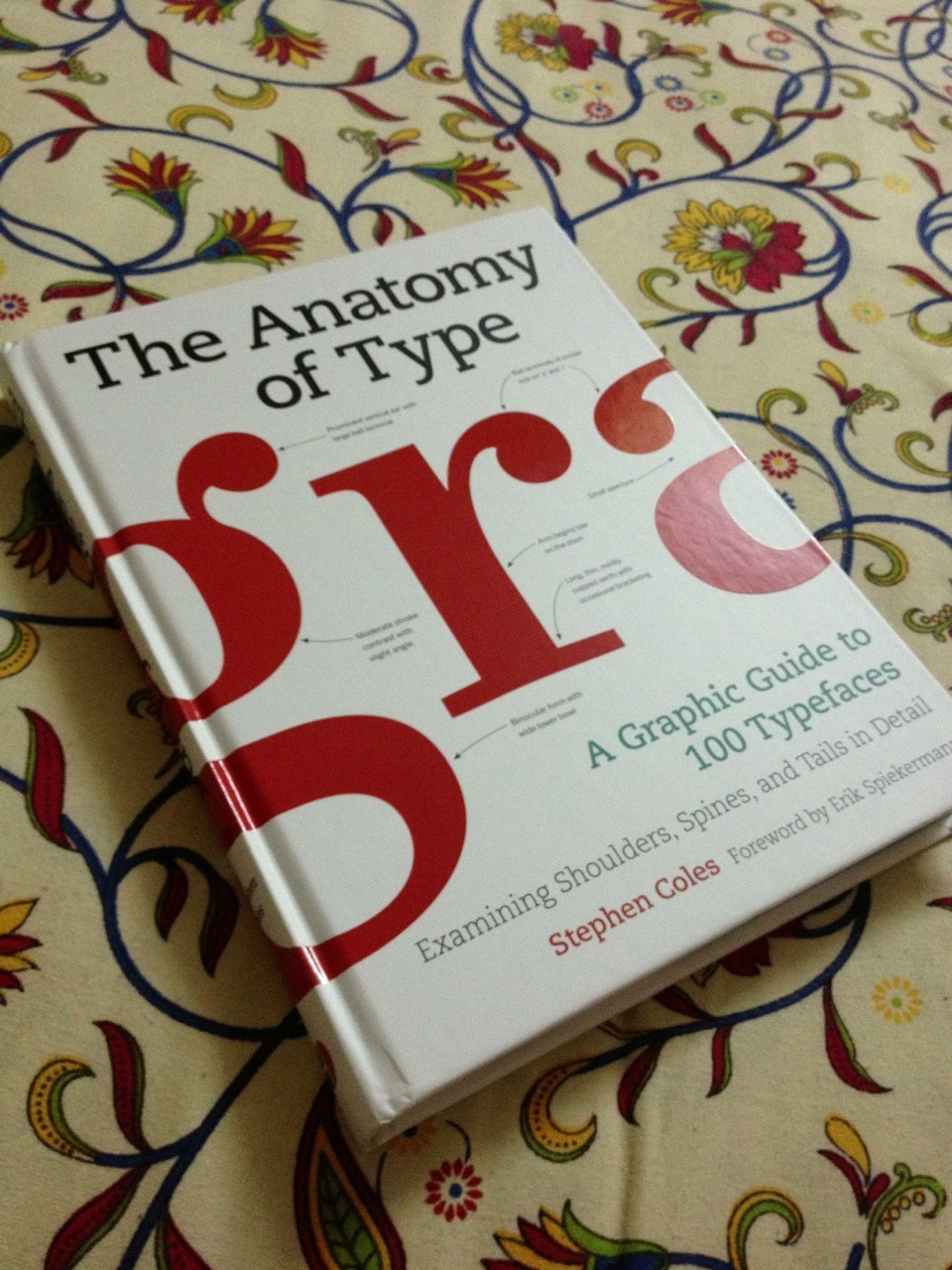
The Anatomy of Type

The Anatomy of Type