Categories
Articles

From Microservices to Microteams: Two Pizza Rule in Action

Have you ever looked at the structure of your organization and wondered why some teams seem to work seamlessly while others struggle to get anything done? The answer may lie in a principle you’ve already heard of: the “Two Pizza Rule.” Popularized by Jeff Bezos, it’s the idea that a team should be small enough to be fed by two pizzas. Simple, right? But there’s a profound reason why this works, and it’s tied to something called Conway’s Law.

Let me explain.

Conway’s Law tells us that the systems you build will inevitably reflect the structure of the teams that design them. If your organization is fragmented or overly complex, your software will mirror those flaws. Conversely, if your teams are well-structured, clear, and independent, your systems will thrive. This insight is a game-changer for anyone building software—or, frankly, running any kind of team.

Why Structure Matters More Than You Think

I learned this lesson firsthand while leading the development of integrated event organizers systems suite, an event-driven micro-services architecture. The project was ambitious, with 80+ services working together seamlessly. But as I quickly realized, the success of the system wasn’t just about the technology—it was about the teams building it.

You see, micro-services thrive on autonomy. Each service has a single, clear responsibility, communicates through well-defined APIs, and operates independently. Sound familiar? That’s exactly what the Two Pizza Rule is all about. Small, cross-functional teams mirror the modularity of micro-services. They are independent, agile, and focused—exactly what you need when tackling complex challenges.

The Two Pizza Rule and Conway’s Law

Here’s where it gets really interesting: the Two Pizza Rule is a practical application of Conway’s Law. Think about it. If your organization is made up of small, nimble teams, the systems you design will naturally reflect that structure. They’ll be modular, efficient, and easy to scale.

But the opposite is also true. If your teams are too large or fragmented, your software will end up bloated, full of dependencies, and hard to maintain. I’ve seen it happen more than once—large teams produce systems that look like committee work: disjointed, slow, and overly complicated.

By keeping your teams small, you’re not just setting them up for success—you’re ensuring the systems they build are designed for success, too.

Why Small Teams Work Better

In smaller teams, communication channels are simplified. With fewer people, the number of potential interactions is drastically reduced, making it easier to align on objectives and share ideas. This efficiency accelerates decision-making, eliminates unnecessary noise, and minimizes misunderstandings. Instead of spending time clarifying roles or chasing approvals, team members can focus on meaningful, impactful conversations that drive progress.

1. They Communicate Efficiently

In a small team, every individual’s role is both visible and significant. There’s no room for ambiguity, and contributions—or the lack thereof—are immediately apparent. This clarity fosters a strong sense of ownership among team members, motivating them to deliver their best. When everyone understands their responsibility and its direct impact on the team’s success, it creates a culture of trust and accountability where excellence becomes the norm.

2. They Foster Clear Accountability

In a small team, every individual’s role is both visible and significant. There’s no room for ambiguity, and contributions—or the lack thereof—are immediately apparent. This clarity fosters a strong sense of ownership among team members, motivating them to deliver their best. When everyone understands their responsibility and its direct impact on the team’s success, it creates a culture of trust and accountability where excellence becomes the norm.

3. They Adapt Quickly to Change

Priorities shift—whether it’s due to evolving customer needs, market dynamics, or internal realignments. Small teams are inherently agile. They can pivot quickly without getting bogged down by bureaucracy or lengthy chains of command. This flexibility enables them to seize opportunities, respond to challenges in real-time, and stay ahead in fast-paced environments.

4. They Create Focused, Modular Systems

Small teams naturally align with the principles of modularity. Much like microservices in software design, they focus on specific, well-defined objectives. This reduces overlap, eliminates dependencies, and ensures that every team member is working toward a shared, clear goal. This modular approach not only enhances productivity but also makes it easier to integrate contributions across teams, ensuring seamless collaboration on larger projects.

We embraced these principles wholeheartedly. Each micro-team was given full ownership of a specific service, from initial design to final deployment. This autonomy empowered our teams to take pride in their work and deliver results that exceeded expectations. By clearly defining responsibilities and giving teams the freedom to innovate, we didn’t just improve the quality of our output—we cultivated a culture of commitment, creativity, and accountability.

Small teams aren’t just efficient—they’re transformative. They create an environment where everyone’s voice matters, adaptation is second nature, and excellence is a collective goal. In a world that demands agility and precision, small teams have a unique edge—and we harnessed that to its fullest potential.

How We Build Micro-Teams That Work

Looking back, here are a few key lessons we applied:

1. Defined Clear Roles & Goals

Just as every micro-service had a single responsibility, we ensured every team member knew exactly what they were accountable for. By clearly defining roles, we eliminated overlaps and confusion, which allowed the team to focus entirely on their objectives.

2. Minimized Dependencies

We encouraged our teams to solve problems within their domain before seeking external help. This approach kept projects moving forward without unnecessary delays. When dependencies outside the team arose, we treated them as opportunities to innovate and streamline processes, making teams more self-sufficient over time.

3. Communicated Like APIs

We treated our teams like micro-services, setting up clear communication protocols for how they interacted with one another. Internally, we aimed for communication saturation, ensuring that everyone within the team was fully informed and aligned. Whenever cross-team communication was required, we treated it as a problem statement to solve. This led us to ask questions like, “Why is this dependency here?” and “How can we reduce it in the future?”

4. Encouraged Puzzle-Like Diversity

We deliberately built teams with specific pieces of the puzzle that fit well together. By encouraging diversity in skills and expertise within teams, we reduced external dependencies while fostering autonomy. Each team became a self-contained unit, equipped to make decisions and tackle challenges independently. This diversity also sparked innovation and helped us approach problems from multiple perspectives.

5. Celebrated Autonomy

We gave our teams the freedom to make decisions within their scope. By trusting them, we saw remarkable results. Autonomy not only accelerated decision-making but also boosted morale. Team members took ownership of their work, creating a culture of accountability and pride in the outcomes.

From Micro-services to Micro-Teams

The success of the project wasn’t just about building great software—it was about building great teams. The Two Pizza Rule gave us a framework to align our team structure with the architecture we were designing. By keeping our teams small, we created a system that was agile, scalable, and resilient.

And here’s the best part: this approach doesn’t just apply to software. Whether you’re running a marketing department, managing a product launch, or leading a creative team, the principles are the same. Small, focused teams will always outperform large, unwieldy ones.

Why This Matters to You

If there’s one thing I want you to take away, it’s this: the structure of your teams isn’t just an operational decision—it’s a strategic one. By adopting the Two Pizza Rule, you’re not just making life easier for your teams; you’re setting your entire organization up for long-term success.

So, the next time you’re assembling a team, think like a micro-services architect. Keep it small. Keep it focused. And remember: just like a well-designed system, a well-designed team is one that works seamlessly, scales effortlessly, and delivers consistently.

Because in the end, great teams build great things. And sometimes, all it takes is two pizzas to get started.
Categories
Articles

Healing The Hidden Wounds: Transforming Gossip Into Growth

In every corner of your organization lies the potential for greatness, powered by clear and open communication. Yet, when whispers and backchannel chatter begin to weave through the corridors, consider this not as mere office politics, but as a beacon highlighting deeper, more systemic challenges within your communication landscape. Your role as a leader stretches far beyond the realms of task delegation and project oversight; you are the steward of your team’s culture, the architect of an environment where trust and clarity can thrive.

Seeing these hidden conversations not as problems but as symptoms is your first step on a journey of transformation. It’s a call to action, inviting you to delve beneath the surface, to understand and address the roots of these whispers. In Sarah Drasner’s words, “As you move up the leadership chain, the further you will be from the actual metal of the problems, and thus, you need to rely on your staff and others to tell you the truth of the problem space.”

This is your moment to turn potential discord into powerful growth opportunities, to stitch together any rifts with threads of transparency and unity. Let’s understand why this happens and how we can tackle it effectively.

Understanding Why Backchannel Communication Happens

Backchannel communication typically emerges from a perceived lack of efficacy, safety, or accessibility in official communication channels. This can stem from various factors:

  1. Lack of Trust: If employees believe that their inputs are undervalued or ignored in formal settings, they may seek alternative routes to voice their concerns or suggestions.
  2. Perceived Inefficiency: The official channels may exist, but if they’re seen as slow or unresponsive, employees will naturally look for a faster way to convey information.
  3. Fear of Reprisal: Concerns over potential negative repercussions for speaking up can push employees towards more covert means of communication.
  4. Cultural Norms: An organizational culture that inadvertently favors informal over formal communication can encourage back channeling as a norm.
  5. Lack of Awareness or Training: Without proper knowledge or skills on effective communication practices, employees might not utilize official channels effectively.

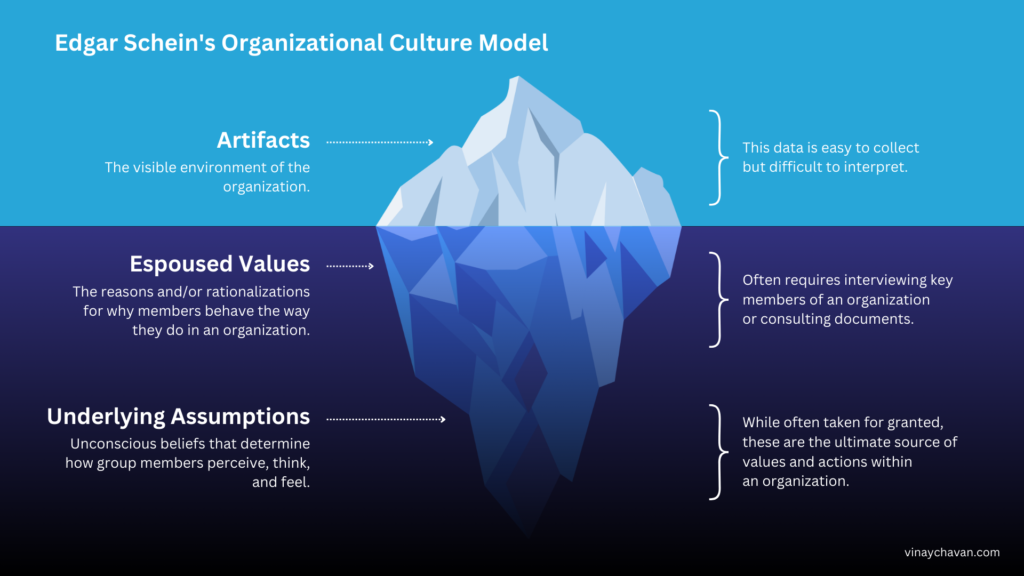
Edgar Schein’s Organizational Culture Model offers a profound lens through which to examine and address these undercurrents. Originally published in 1985, Schein’s book “Organizational Culture and Leadership” proposed that organization culture can be analyzed on three levels: Artifacts, Espoused Values, and Basic Underlying Assumptions, guiding you in identifying and remedying the disconnects that often lead to indirect communication paths.

Artifacts as Indicators: If you notice a prevalence of gossip and backchannel chatter, these behaviors can be considered artifacts – visible indicators of deeper cultural dynamics. They suggest a misalignment within the team’s culture, pointing towards gaps between public endorsements and private practices or beliefs.

Espoused Values and Reality Check: When there’s a noticeable gap between what your organization claims to value (such as open communication) and what your team members experience, it creates fertile ground for back channeling. Your team might be bypassing official channels not out of malice, but because those channels are perceived as ineffective or, worse, punitive.

Core Beliefs Influencing Behavior: The most profound layer, the basic underlying assumptions about trust, safety, and the effectiveness of open communication, ultimately shapes your team’s communication habits. If the tacit understanding is that speaking up openly is discouraged or risky, backchannel communication becomes a natural response.

Strategies You Can Implement to Address Root Causes

1. Introducing Direct Communication Channels

  • Create a 1:1 Communication Channel: Establish a dedicated channel for 1:1 meetings with team members, using a meeting agenda checklist that’s only shared between you two. Regularly address each item in these meetings, listening to feedback without judgment to ensure team members feel heard in a safe space.
  • Report to Your Team: Make it a practice to report back to your team about the actions you’ve taken based on their feedback, mirroring the accountability you expect from them. This demonstrates your commitment to their concerns and the steps you’re taking to address them.

2. Normalize Seeking Help

  • Demonstrate Vulnerability: Share your own experiences of seeking help, highlighting that it’s normal and safe. By sharing moments when you were vulnerable and how asking for help benefited you, you lead by example, normalizing help-seeking behavior among your team.

3. Harmonizing Artifacts with Values

  • Lead by Example: Mirror the organization’s espoused values in your actions. Transparent communication and decision-making from you set a behavioral benchmark for your team.
  • Implement Visible Changes: Actively support and promote open dialogue and feedback channels, like open forums and transparent policy updates, demonstrating your commitment to these values.
  • Be at Service: Position yourself as a service provider to your team, focusing on facilitating their success and addressing their needs proactively.

4. Closing the Gap Between Stated Values and Practices

  • Reinforce Values Through Actions: Ensure that your team’s policies and your managerial conduct consistently mirror the organization’s stated values, emphasizing the significance of these values through your actions and communication.
  • Establish Effective Feedback Mechanisms: Set up channels for your team to voice their experiences and views on the congruence between espoused values and actual practices, and act on this feedback.

5. Shifting Basic Underlying Assumptions

  • Cultivate a Safe Environment: Strive to create a psychologically safe space where team members feel secure in sharing their views and feedback without fear of repercussions.
  • Engage in Open Dialogues: Encourage discussions that enable your team to collectively examine and potentially alter the underlying assumptions that influence their behavior, especially concerning communication and trust.

6. Maintain Continuous Evaluation and Adaptation

  • Regularly Assess Cultural Alignment: Employ surveys, focus groups, or informal check-ins to evaluate the coherence between the visible culture of your team, the values you advocate for, and the foundational assumptions.
  • Be Ready to Pivot: Stay flexible and ready to modify your strategies based on feedback, ensuring your initiatives to foster open communication align with your team’s evolving requirements.

These strategies, rooted in understanding and actively shaping the organizational culture, represent a comprehensive approach to addressing and mitigating backchannel communication and gossip. As you implement these strategies, remember that fostering a culture of openness and trust is an ongoing process that requires persistence, empathy, and adaptability.

Wrapping Up: Cultivating a Culture of Openness

As we’ve explored the depths of Schein’s Organizational Culture Model and its application in addressing backchannel communication and gossip, it’s clear that fostering a culture of transparency and trust is both a challenge and an opportunity for leadership. By implementing the strategies discussed, you embark on a journey towards realigning your team’s artifacts, espoused values, and basic underlying assumptions, paving the way for a more open, communicative, and cohesive work environment.

However, the journey doesn’t end here. The complexity and dynamism of organizational culture mean that there’s always more to learn, more strategies to try, and more adjustments to make. That’s where you come in. Your experiences, challenges, and successes in navigating and shaping your team’s culture are invaluable. They not only enrich your own understanding but can also light the way for others facing similar challenges.

I invite you to share your stories, strategies, and questions. Have you found effective ways to improve your organization’s culture? Are there persistent challenges that you’re grappling with? Let’s continue the conversation. Connect with me on LinkedIn. Together, we can build a community of practice, sharing insights and solutions that help us all grow as leaders and culture shapers.

Your insights and experiences are crucial to broadening our collective understanding of organizational culture and the practical steps we can take to nurture environments where everyone feels heard, valued, and motivated. Let’s collaborate to uncover new strategies, solve challenges, and contribute to creating workplaces where transparency, trust, and open communication flourish.

Looking forward to connecting, sharing, and learning together.