Categories
Articles

How a Group Becomes a Team

If there is one lesson I have learned in my years of leading engineering teams and product innovation, it is this: nothing gets done without teamwork. As a manager, I’ve seen great ideas falter and projects stall when individuals work in silos, each with their own vision and approach. But when you transform a group of people into a true team, magic happens. Ideas flow seamlessly, challenges are tackled collectively, and goals are not just met—they are exceeded. But how does a group become a team? That’s where Tuckman’s stages of team development come into play.

From a Collection of Individuals to a Unified Force

Imagine you’ve just put together a new team—whether for a product launch, a critical engineering project, or a startup venture. You’ve got talented individuals, each bringing their own strengths and experiences. However, without a shared direction and understanding of how to work together, they remain just that—individuals. The challenge as a leader is to shape them into a cohesive unit working towards a singular goal.

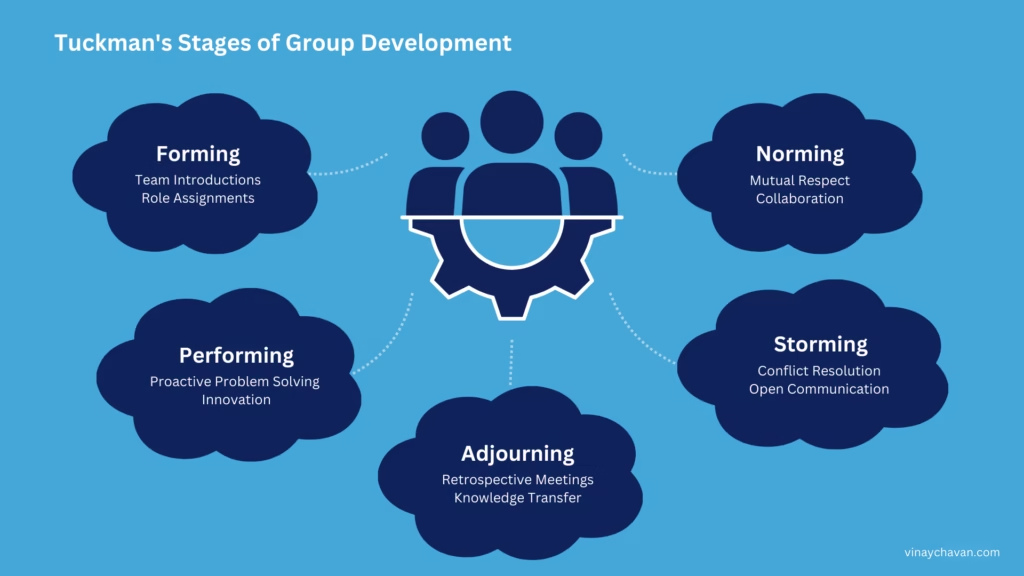
Dr. Bruce Tuckman, a psychologist, identified five key stages that every team goes through in its evolution. Recognizing these stages can help managers and leaders guide their teams effectively and accelerate their growth. Let’s dive in.
Stage 1: Forming – The Excitement of the Unknown

At the forming stage, team members are polite, cautious, and eager to understand their roles. There’s excitement, but also uncertainty. I remember when I took over as CEO of Yapsody India, leading a diverse team across engineering, customer success, marketing, and design. In those early days, everyone was feeling out the new dynamics. My role as a leader was to provide clarity, set expectations, and ensure that everyone felt heard.

What Happens in the Forming Stage?

  • Team introductions and icebreaker activities to build rapport.
  • Setting initial goals, project objectives, and team expectations.
  • Assigning roles and responsibilities while allowing flexibility for adjustments.
  • Establishing communication channels and tools (Open Handbook, Process documents, Google Chat/Email, etc.).

Stage 2: Storming – Where Conflicts Shape Growth

This is the stage where tensions arise. People challenge ideas, struggle for influence, and experience frustration. It’s tempting to avoid conflict, but I’ve learned that healthy debates, when managed correctly, lead to better outcomes.

At Yapsody, we built a culture where challenging the status quo was encouraged, but it had to be done with integrity and respect. The key here is to ensure that conflicts are constructive, not personal. Leaders must act as facilitators, helping the team navigate differences while reinforcing the shared goal.

What Happens in the Storming Stage?

  • Differences in working styles and opinions surface, leading to conflict.
  • Some members may push against leadership or team norms.
  • Leaders step in to mediate disputes and set conflict resolution guidelines.
  • Encouraging open communication and trust-building exercises.
  • Establishing problem-solving frameworks to resolve issues objectively.

Stage 3: Norming – Finding the Rhythm

Once conflicts are addressed, the team starts to find its rhythm. Processes become smoother, collaboration improves, and individuals begin to trust one another. This is the stage where you see alignment—where team members understand not just their own roles, but also how they fit into the bigger picture.

As a leader, this is the time to reinforce positive behaviors and ensure that progress is being made. Acknowledging wins, big or small, fosters a sense of momentum and unity. I always made it a point to celebrate small victories, as they build confidence and reinforce the idea that we are moving forward together.

What Happens in the Norming Stage?

  • Team members develop mutual respect and recognize each other’s strengths.
  • Collaboration improves, and workflows become more efficient.
  • Leaders take a step back, allowing the team to self-organize more effectively.
  • Regular check-ins and retrospectives ensure alignment and continued growth.
  • Social bonding activities help solidify trust and camaraderie.

Stage 4: Performing – The Peak of Efficiency

This is where the real magic happens. A high-performing team is self-sufficient, goal-oriented, and innovative. They don’t just execute; they anticipate challenges, adapt, and push boundaries.

In my years of leading agile teams, I’ve seen the shift when a team moves into this stage. Stand-up meetings become more about problem-solving rather than status updates. Engineers proactively improve code without being asked. Designers collaborate seamlessly with developers. It’s a stage where leadership shifts from directing to empowering.

What Happens in the Performing Stage?

  • The team operates with minimal supervision and high efficiency.
  • Problem-solving is proactive rather than reactive.
  • Team members hold themselves and each other accountable.
  • High levels of innovation and productivity emerge.
  • Focus shifts from managing conflicts to achieving peak performance.

Stage 5: Adjourning – The Transition to What’s Next

Every project has an end, and every team eventually disbands or evolves. This stage, sometimes called the “mourning” phase, is often overlooked, but it’s vital. Reflection, feedback, and knowledge transfer ensure that learnings are carried forward.

I’ve always encouraged my teams to document lessons learned and celebrate the journey before moving on to the next challenge. It provides closure and sets the stage for future success.

What Happens in the Adjourning Stage?

  • Conducting retrospective meetings to reflect on successes and challenges.
  • Recognizing individual contributions and celebrating achievements.
  • Knowledge transfer sessions to document insights for future teams.
  • Emotional closure as team members move on to new projects or roles.
  • Maintaining professional relationships and connections beyond the project.

Why Teamwork is Everything

Building a successful team is not about assembling the smartest individuals; it’s about creating an environment where those individuals can thrive together. The best ideas are rarely the result of one genius mind but rather the culmination of diverse perspectives refining each other.

In my journey, from leading mobile development at Yapsody to overseeing complex engineering infrastructures, I’ve seen firsthand that teamwork is the single most important factor in getting things done. No matter how innovative your technology, how groundbreaking your product, or how ambitious your vision—without a strong, cohesive team, execution falls apart.

So, if you’re a leader, engineer, or entrepreneur, invest in your team. Guide them through the natural ups and downs of team development. Encourage open communication, foster trust, and most importantly, keep them focused on a singular, compelling goal. Because when a group truly becomes a team, there are no limits to what they can achieve.
Categories
Articles

Leading Through Conflict: A Self-Aware Approach

Have you ever found yourself in a situation where a tough decision had to be made, and differing opinions were pulling you in opposite directions? Perhaps a team project was on the verge of missing a deadline because two key stakeholders couldn’t agree on the best approach. Or maybe you’ve had to mediate a disagreement between colleagues, unsure whether to push for a compromise or let one party take the lead. If so, you’re not alone. Conflict is an inevitable part of any organization.

Why Self-Awareness Matters in Conflict Resolution

Understanding one’s default conflict-handling mode is essential for effective leadership. Self-awareness allows leaders to:

  • Recognize their natural tendencies in conflict situations.
  • Assess whether their default approach is appropriate for the given context.
  • Develop the flexibility to adopt different styles as needed.
  • Enhance emotional intelligence, improving communication and team dynamics.

The way leaders manage conflict has a profound impact on organizational health, culture, and performance. To navigate these complexities effectively, leaders must first develop self-awareness before entering a conflict negotiation. One of the most insightful tools for this self-awareness is the Thomas-Kilmann Conflict Mode Instrument (TKI).

Understanding the TKI Framework

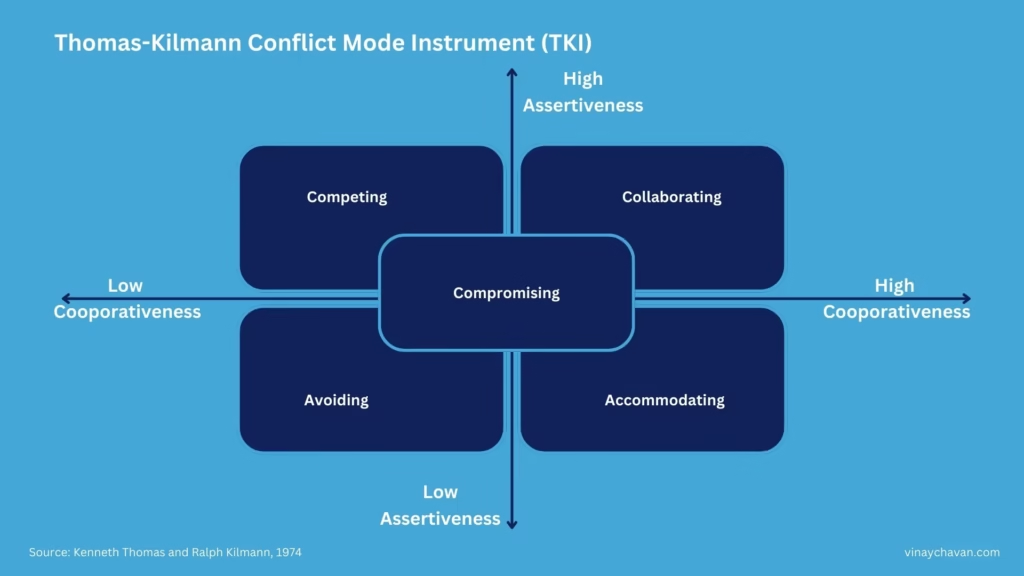
Developed by Kenneth W. Thomas and Ralph H. Kilmann, the TKI identifies five primary conflict-handling modes, each based on two fundamental dimensions:

  1. Assertiveness – The extent to which an individual tries to satisfy their own concerns.
  2. Cooperativeness – The extent to which an individual attempts to satisfy the concerns of others.

These two dimensions create five conflict resolution styles:

1. Competing (High Assertiveness, Low Cooperativeness)

A competing approach is highly assertive and low in cooperation. Leaders using this mode pursue their own interests forcefully, often at the expense of others. This approach is most effective in situations where quick, decisive action is required, such as emergencies, or when protecting non-negotiable principles. However, overuse can damage relationships and create resentment among team members.

Example Statement: “I understand your concerns, but this decision needs to be made now, and we are going with my approach.”

Real-Life Scenario: A project manager insists on meeting a strict deadline despite pushback from team members about workload, prioritizing efficiency over consensus.

2. Collaborating (High Assertiveness, High Cooperativeness)

A collaborative approach seeks win-win outcomes. Leaders employing this style invest time in finding solutions that satisfy all parties. This mode is ideal for complex problems requiring creative solutions and when maintaining strong relationships is crucial. However, it demands patience and open communication, making it impractical for urgent decision-making.

Example Statement: “Let’s brainstorm together and find a way where both of our concerns are addressed.”

Real-Life Scenario: Two department heads with conflicting budget requests work together to identify a solution that supports both their goals without compromising key priorities.

3. Compromising (Moderate Assertiveness, Moderate Cooperativeness)

A compromising leader seeks a middle ground, ensuring that both parties give up something to reach an agreement. This approach is useful when time constraints prevent full collaboration but still require a fair outcome. While effective in many situations, excessive reliance on compromise can lead to suboptimal solutions where neither party is fully satisfied.

Example Statement: “If you’re willing to adjust your deadline by one week, I can allocate more resources to support you.”

Real-Life Scenario: A marketing director and sales manager agree to split the promotional budget evenly instead of one department receiving a majority, ensuring both teams get some level of support.

4. Avoiding (Low Assertiveness, Low Cooperativeness)

Avoidance involves sidestepping conflict altogether. Leaders may use this approach when an issue is trivial, when emotions are too high for productive discussion, or when more information is needed before engaging. However, habitual avoidance can lead to unresolved tensions and a culture of passivity in conflict resolution.

Example Statement: “This isn’t the right time to discuss this. Let’s revisit it after the quarterly review.”

Real-Life Scenario: A team member avoids addressing a minor workplace dispute, hoping the issue will resolve itself over time rather than confronting it immediately.

5. Accommodating (Low Assertiveness, High Cooperativeness)

An accommodating leader prioritizes the needs of others over their own, often yielding to maintain harmony. This approach is beneficial in situations where preserving relationships is more important than immediate personal gain. However, excessive accommodation can lead to a loss of respect and an imbalance in power dynamics.

Example Statement: “I see how important this is to you, so I’ll support your approach even though I had a different perspective.”

Real-Life Scenario: An employee volunteers to cover a coworker’s shift at the last minute despite personal inconvenience, prioritizing teamwork over personal plans.

Steps to Enhance Conflict-Handling Awareness

Good leaders recognize that conflict, when managed constructively, can drive innovation, strengthen teams, and improve decision-making. By integrating TKI into their leadership toolkit, they cultivate a culture of trust, accountability, and open communication.

  1. Self-Assessment: Use the TKI assessment to determine your dominant conflict mode. Take time to reflect on past conflicts—how did you handle them? Were you more assertive or cooperative? Understanding your go-to response provides a foundation for growth.
  2. Situational Analysis: Before engaging in a conflict, evaluate the stakes, relationships involved, and desired outcomes. Ask yourself questions like: What are the long-term implications of this conflict? Is this a one-time disagreement, or does it indicate a deeper issue that needs addressing? Considering these factors will help you choose the most effective conflict-handling mode.
  3. Mindful Adaptation: Develop the ability to shift between conflict modes depending on the context. For example, in high-stakes negotiations, collaboration might be the best approach, while minor disagreements may be resolved through accommodation or compromise. Practicing adaptability ensures that conflicts are managed effectively without damaging relationships.
  4. Feedback Loop: Seek feedback from colleagues and mentors on your conflict management style. Regularly discussing your approach with trusted advisors provides valuable perspectives that help refine your conflict resolution skills. Additionally, observing how others handle conflicts can offer new strategies to incorporate into your own leadership approach.
  5. Skill Development: Invest in training, workshops, or coaching to enhance your conflict resolution skills. Practicing active listening, negotiation techniques, and emotional intelligence can improve how you navigate difficult situations and build stronger relationships with your team.
  6. Post-Conflict Reflection: After a conflict is resolved, take time to reflect on the outcome. What worked well? What could have been handled differently? Continuous learning from each experience helps refine your conflict resolution strategy over time.

Final Thoughts

Effective conflict resolution is not about winning or losing—it’s about fostering understanding, collaboration, and sustainable solutions. By embracing self-awareness and adaptability, leaders can turn conflicts into opportunities for personal and professional growth. The Thomas-Kilmann Conflict Mode Instrument offers a structured approach to navigating difficult conversations with clarity and confidence. As you refine your conflict management skills, remember that every disagreement is a chance to strengthen relationships, build trust, and contribute to a healthier, more resilient organization.

Key Takeaways

  • Conflict is an inevitable part of leadership and can be managed constructively.
  • The Thomas-Kilmann Conflict Mode Instrument (TKI) helps leaders understand their natural conflict resolution tendencies.
  • There are five conflict-handling modes: Competing, Collaborating, Compromising, Avoiding, and Accommodating.
  • Self-awareness is essential for choosing the right conflict resolution approach for different situations.
  • Developing adaptability in conflict resolution fosters stronger relationships and better decision-making.
  • Seeking feedback, engaging in situational analysis, and practicing mindful adaptation enhance conflict-handling skills.
  • Every conflict presents an opportunity to learn, grow, and improve workplace culture.